Silver Blue Dial Luxury Watch:
Introduction
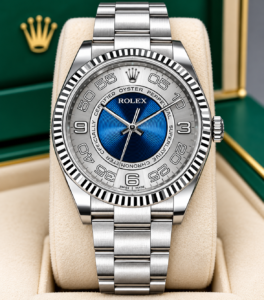
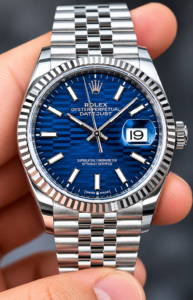
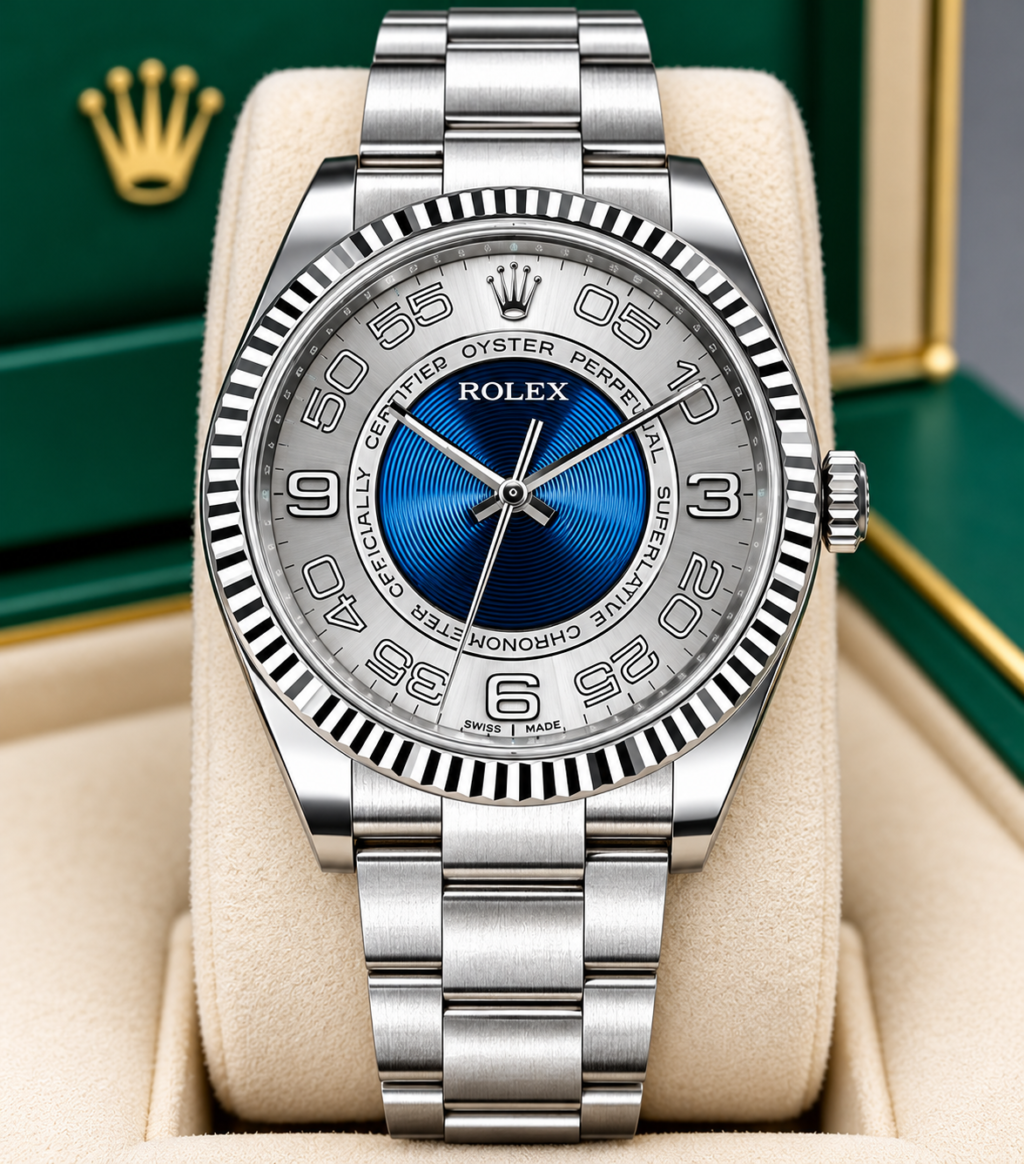
A Silver Blue Dial Luxury Watch combines the timeless appeal of silver with the distinctive character of a blue dial. This combination creates a refined appearance that works well with formal clothing, business attire, and everyday outfits. The silver exterior gives the watch a clean metallic finish, while the blue dial adds depth, contrast, and visual interest.
Luxury watches are appreciated for more than their appearance. Their overall quality depends on several factors, including movement performance, case construction, dial finishing, crystal material, bracelet design, comfort, and long-term maintenance. Understanding these details helps buyers make informed decisions instead of choosing a watch based only on its colour or style.
This guide explores the design, materials, movement options, important features, maintenance requirements, and buying considerations associated with a silver blue dial luxury watch. It also explains what to check before purchasing and how to evaluate whether a particular model meets your expectations.
1. What Makes a Silver Blue Dial Luxury Watch Special?
The appeal of a silver blue dial watch comes from the balance between two complementary colours. Silver provides a neutral metallic appearance, while blue creates a noticeable focal point without making the design look overly bright.
This combination can suit people who prefer a watch that looks elegant but remains versatile. Depending on its case shape, dial texture, bracelet construction, and overall proportions, the same colour combination can appear traditional, contemporary, or sporty.
Important design elements include:
- Silver-tone case: Creates a polished and coordinated exterior.
- Blue dial: Adds colour, contrast, and visual depth.
- Metal bracelet: Can provide a consistent appearance from the case to the wrist.
- Distinctive bezel: Frames the dial and contributes to the watch’s overall character.
- Clear hour markers: Help the wearer read the time.
- Balanced proportions: Support comfortable wear and visual harmony.
A well-designed watch brings these features together without allowing one element to overpower the rest.
2. Understanding the Silver and Blue Colour Combination
Silver and blue are popular watch colours because they offer contrast while maintaining a balanced appearance. Silver is generally associated with a clean, neutral finish. Blue can create a calm, confident, and visually distinctive look.
The exact appearance depends on lighting and surface treatment. A dark blue dial may look formal and understated, while a lighter or brighter blue can create a more noticeable effect. Textured surfaces may also reflect light differently from smooth, flat dials.
Silver-tone components can have different finishes:
- Polished finish: Reflects more light and creates a glossy appearance.
- Brushed finish: Has a softer look with visible directional surface lines.
- Satin finish: Offers a subtle appearance between highly polished and visibly brushed surfaces.
Some watches combine these finishes to create contrast between the case, bezel, and bracelet. Buyers should inspect the finishing carefully because uneven surfaces, rough edges, or inconsistent links can affect the overall impression of quality.
3. Blue Dial Design and Readability
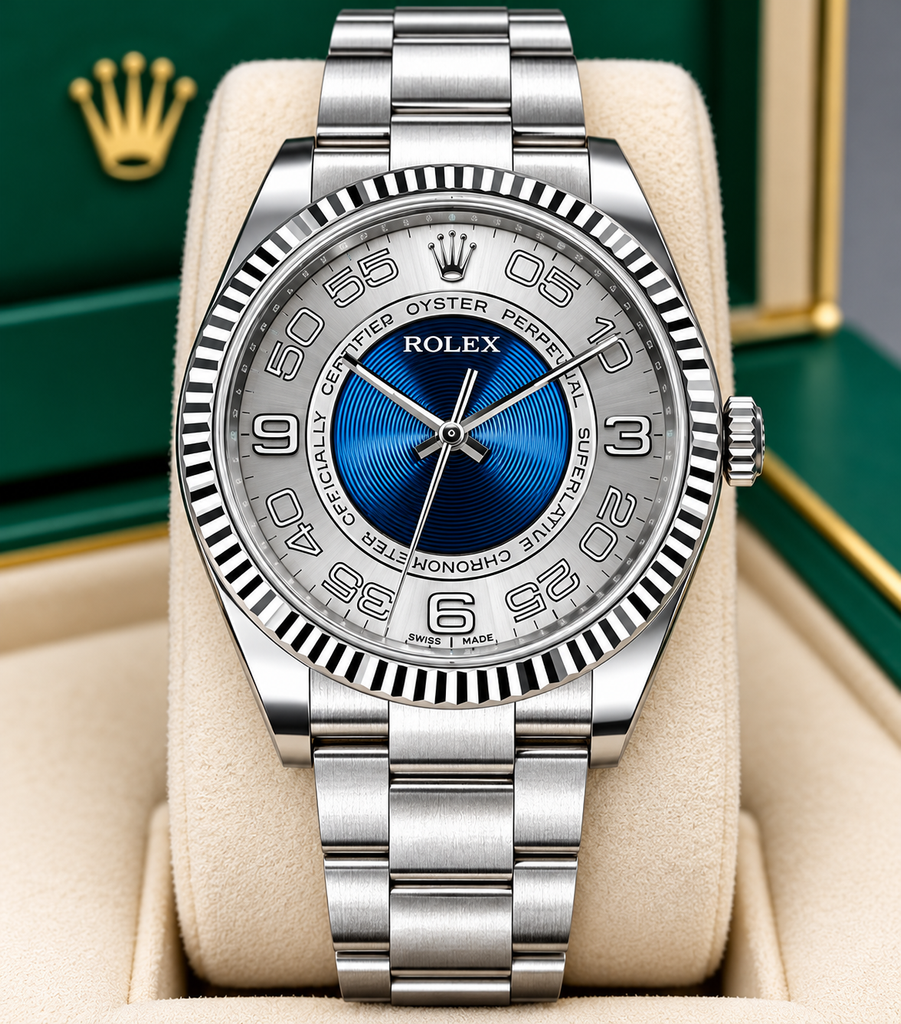
The dial is one of the most important parts of a wristwatch because it displays the information the wearer uses most frequently. In a silver blue dial luxury watch, the blue surface provides the main visual contrast against the hands and hour markers.
Dial colour and texture
Blue dials are available in several shades, including navy, royal blue, midnight blue, and lighter metallic tones. Their appearance can change depending on the lighting and dial finish.
A sunburst finish, for example, creates a pattern of light reflections that spread outward from the centre. A textured dial uses a surface pattern to add visual detail. A smooth dial offers a simpler and more minimal appearance.
Hour markers and numerals
Hour markers should be positioned consistently and remain easy to distinguish. Depending on the design, they may use numerals, simple indices, or applied markers.
The quality of their placement matters. Uneven spacing or poorly aligned markers can reduce the visual balance of the dial.
Watch hands
The hour, minute, and second hands should contrast sufficiently with the dial to remain readable. Their shape, length, and position influence both appearance and usability.
A practical watch should allow the wearer to identify the time quickly, even when the dial includes decorative details.
Date display
Some watches include a date window. If present, it should be positioned neatly and use clear numerals. Buyers should check that the date display is easy to read and that the date-setting process is explained in the manufacturer’s instructions.
4. Silver-Tone Case Construction
The case protects the movement and supports the crystal, dial, and other internal components. Its material and construction influence durability, weight, comfort, and appearance.
Silver-coloured cases can be manufactured from different materials. Stainless steel is common, but a silver appearance alone does not prove that a watch uses a particular steel grade or even solid metal.
Before buying, check:
- The exact case material stated by the manufacturer.
- Whether the surface is solid metal, plated, or coated.
- The quality of the case finishing.
- Whether the crown fits securely.
- Whether the case edges feel smooth.
- Whether the case size is suitable for the intended wearer.
Case size and wrist comfort
Case diameter is commonly measured across the case, excluding the crown. However, diameter alone does not determine how large a watch looks on the wrist. Lug-to-lug length, case thickness, bracelet width, and case shape also affect its proportions.
A large watch may feel uncomfortable on a smaller wrist, while a very small case may not provide the appearance or readability someone wants. Trying the watch on, when possible, is one of the best ways to evaluate its fit.
5. Bezel Design and Its Purpose
The bezel is the ring surrounding the watch crystal. It contributes to the design and, on certain models, provides a practical function.
Some bezels are smooth, while others have decorative patterns, engraved markings, or rotating mechanisms. A fluted-style bezel, for example, uses repeated ridges to create a distinctive light-reflecting surface.
Not every decorative bezel has a functional timing feature. Buyers should distinguish between a decorative design and a rotating bezel designed for a specific purpose.
When inspecting a bezel, look for consistent finishing, secure construction, and alignment with the dial. On a rotating model, check the manufacturer’s instructions to understand how the mechanism should operate.
6. Watch Crystal: Sapphire, Mineral, and Acrylic
The crystal is the transparent cover above the dial. It protects the face from everyday contact and allows the wearer to read the time.
Three common crystal materials are sapphire, mineral glass, and acrylic.
| Crystal type | General characteristics | Points to consider |
|---|---|---|
| Sapphire | Highly resistant to everyday scratching | Can be more expensive to replace |
| Mineral glass | Common in many watches and offers practical everyday protection | Usually scratches more easily than sapphire |
| Acrylic | Lightweight and can sometimes be polished | More easily marked by scratches |
Sapphire crystal is valued for its scratch resistance, but buyers should not assume a watch has sapphire simply because it is described as luxurious. The exact crystal material should be confirmed through the manufacturer’s specifications or reliable product documentation.
Some crystals also include anti-reflective treatment to reduce glare. This can improve readability in bright environments, although the effectiveness depends on the coating and its condition.
7. Understanding Watch Movements
The movement is the mechanism responsible for keeping time and operating the watch’s functions. Movement type is one of the most important factors to understand before making a purchase.
Automatic movement
An automatic watch uses a mechanical system that winds itself through the natural movement of the wearer’s wrist. It does not normally require a battery, but it may stop if it is left unworn for longer than its power reserve.
Automatic movements are appreciated by people who enjoy traditional mechanical watchmaking. Their performance depends on the movement’s design, condition, regulation, and maintenance.
Manual mechanical movement
A manual mechanical watch requires the wearer to wind the crown according to the manufacturer’s instructions. It uses a mechanical system rather than an electronic battery-powered movement.
Some enthusiasts enjoy the direct connection with the mechanism that manual winding provides.
Quartz movement
A quartz watch uses an electronic system regulated by a quartz crystal and generally runs on a battery. Quartz models are often practical for people who want straightforward timekeeping with relatively simple daily care.
Movement comparison
| Movement | Power source | General benefit |
|---|---|---|
| Automatic | Wound mainspring | Mechanical operation with wrist-motion winding |
| Manual mechanical | Wound mainspring | Traditional hand-wound mechanism |
| Quartz | Battery or specified electronic power source | Convenient everyday timekeeping |
No movement type is automatically the best choice for everyone. The right option depends on personal preference, maintenance expectations, budget, and intended use.
8. Bracelet Design, Materials, and Comfort
A metal bracelet can complement the silver-tone case and create a coordinated appearance. However, bracelet quality is not determined by appearance alone.
Important details include link construction, finishing, flexibility, clasp security, and adjustment options.
Bracelet links
Bracelets may use solid or folded link construction. The exact design affects weight, flexibility, and durability. Buyers should check whether the links move smoothly and whether the bracelet has sharp edges or loose connections.
Clasp quality
The clasp keeps the watch secured around the wrist. It should close properly and remain comfortable during normal movement.
Some bracelets offer micro-adjustment or removable links. These features can make it easier to achieve a suitable fit.
Comfort and sizing
A bracelet that is too tight may feel restrictive, while one that is too loose can move excessively. A professional watch technician can help adjust the bracelet safely without damaging its links or clasp.
9. Water Resistance and Everyday Use
Water resistance is an important specification, but it should never be assumed from a watch’s appearance. A metal case and sealed-looking crown do not prove that a watch is suitable for swimming or other water activities.
Water-resistance ratings are normally expressed in metres, bar, or atmospheres. These ratings are based on controlled testing and do not always translate directly into safe real-world use at the stated depth.
Before exposing a watch to water:
- Check the manufacturer’s water-resistance rating.
- Follow the stated limitations for swimming or other activities.
- Make sure the crown and pushers are used according to the instructions.
- Avoid operating the crown underwater unless the manufacturer specifically permits it.
- Have the seals inspected when recommended.
Water resistance can change over time as seals age or components are damaged. A watch should be checked by a qualified technician if its water resistance is important to its intended use.
10. Styling a Silver Blue Dial Luxury Watch
One reason this colour combination remains popular is its flexibility. Silver and blue can complement a wide range of clothing colours without creating an overly complicated look.
Business and office clothing
A silver blue dial watch can pair well with business shirts, suits, and smart-casual clothing. Its metallic finish creates a neat appearance, while the blue dial adds a subtle point of interest.
Formal occasions
For formal events, a watch with balanced proportions, a clean dial, and a comfortable bracelet can complement a dress outfit. The overall design should suit the formality of the occasion.
Casual wear
The same colour combination can also work with jeans, polo shirts, sweaters, and everyday clothing. A simpler dial and comfortable bracelet may be especially practical for regular use.
Matching other accessories
Silver-tone watches can coordinate naturally with other silver-coloured accessories. However, matching every accessory exactly is not necessary. The most important consideration is that the overall outfit looks balanced.
11. How to Evaluate Watch Quality Before Buying
A professional-looking watch is not necessarily a well-made watch. Buyers should examine its construction and documentation rather than relying entirely on photographs or marketing descriptions.
Use the following checklist:
- Check the movement: Confirm whether it is automatic, manual mechanical, or quartz.
- Verify the case material: Look for a clear material specification.
- Confirm the crystal: Check whether it is sapphire, mineral, or acrylic.
- Inspect the dial: Look for consistent marker placement and readable hands.
- Examine the bracelet: Check the links, finishing, and clasp.
- Review water resistance: Confirm the official rating and usage limitations.
- Check the warranty: Understand what is covered and for how long.
- Review service support: Find out whether qualified servicing is available.
- Inspect the seller’s information: Look for clear product details and a transparent return policy.
- Compare the exact model: Make sure the specifications relate to the specific watch being considered.
A reliable seller should be able to explain the product’s specifications and provide documentation where appropriate.
12. Authenticity and Responsible Purchasing
A watch’s appearance cannot establish its authenticity. A design that resembles a well-known luxury style should not automatically be described or sold as an original branded model.
For branded watches, buyers should use authorized or otherwise reputable sellers and verify the exact model through appropriate documentation. Depending on the brand and model, useful records may include purchase documents, warranty information, serial or reference details, and service history.
Be cautious of sellers who make unsupported claims about materials, movement, origin, or authenticity. Product photographs alone cannot confirm these details.
Accurate descriptions are important for both buyers and watch information websites. If a specification is unknown, it is better to say that it has not been verified than to present an assumption as fact.
13. Maintenance and Long-Term Care
Regular care can help preserve a watch’s appearance and support its continued operation. The correct maintenance routine depends on the movement, materials, water resistance, and manufacturer’s instructions.
Cleaning the case and bracelet
For a watch that is confirmed suitable for gentle cleaning, use a soft, clean cloth to remove fingerprints and surface dust. More thorough cleaning should follow the manufacturer’s guidance, particularly if the watch has leather components or uncertain water resistance.
Avoid household chemicals, abrasive materials, and rough cleaning methods that may damage the finish.
Protecting the crystal
Although some crystals are highly scratch-resistant, no crystal should be treated as indestructible. Keep the watch away from hard impacts and store it separately from objects that could scratch its surface.
Mechanical servicing
Mechanical movements contain many small components that may require professional inspection and lubrication. Service intervals vary by movement and manufacturer, so follow the official recommendations rather than relying on one universal schedule.
Battery replacement
Quartz watches require battery replacement when their power runs out. A qualified technician can replace the battery and inspect the seals where appropriate.
Proper storage
When the watch is not being worn, store it in a clean, dry, secure place. Keep it away from strong magnetic sources if the manufacturer recommends doing so.
14. Is a Silver Blue Dial Luxury Watch a Good Choice?
A silver blue dial luxury watch may be a suitable choice for someone who values a combination of metallic styling, dial colour, and versatility. Its appearance can work across different settings, while the exact features determine how practical it is for daily wear.
Before deciding, consider your priorities:
- Do you prefer a mechanical or quartz movement?
- Is the watch comfortable for extended wear?
- Is the dial easy to read?
- Are the materials clearly identified?
- Does the bracelet provide a suitable fit?
- Are the maintenance requirements reasonable?
- Does the price reflect the verified specifications and condition?
A thoughtful purchase is based on a combination of design, function, construction, service support, and personal preference.
15. Frequently Asked Questions
1. What is a silver blue dial luxury watch?
It is a wristwatch with a silver-coloured case or exterior and a blue dial. The combination creates a balanced appearance that can suit formal and casual settings.
2. Why are blue watch dials popular?
Blue dials offer colour and visual depth while remaining versatile. Their appearance can range from subtle navy to brighter metallic shades.
3. Does a silver blue dial watch suit formal clothing?
Yes. A model with balanced proportions and a clean design can complement suits, business clothing, and formal outfits.
4. Is stainless steel always used in silver-tone watches?
No. Silver-tone describes an appearance, not a confirmed material. Buyers should check the manufacturer’s specifications to identify the actual case and bracelet material.
5. Is sapphire crystal better than mineral glass?
Sapphire is generally more resistant to everyday scratching. Mineral glass is also used in many watches and may be less expensive to replace. The best option depends on the intended use and budget.
6. What is the difference between automatic and quartz watches?
Automatic watches use a mechanical mainspring wound through wrist movement, while quartz watches use an electronic timekeeping system regulated by a quartz crystal.
7. Does an automatic watch need a battery?
A traditional automatic mechanical movement does not normally use a battery. It operates through stored mechanical energy.
8. How should a metal watch bracelet fit?
It should feel secure without creating uncomfortable pressure. The watch should not move excessively around the wrist.
9. Can a silver blue dial watch be worn every day?
It can be suitable for everyday wear if its construction, comfort, movement, and water resistance match the user’s needs.
10. Are all luxury-looking watches water-resistant?
No. Water resistance must be confirmed through the manufacturer’s specifications. Appearance alone does not establish water protection.
11. How can I check a watch’s movement?
Check the official product specifications, documentation, or a qualified watch technician’s assessment. Do not rely only on the appearance of the dial.
12. How often should a mechanical watch be serviced?
Service intervals vary by movement and manufacturer. Follow the official guidance and seek professional inspection if the watch develops performance problems.
13. Can the bracelet size be adjusted?
Many metal bracelets can be adjusted by removing or repositioning links. Some models also offer fine adjustment through the clasp.
14. Does a blue dial look different under different lighting?
Yes. The shade and texture can reflect light differently, making the dial appear darker, brighter, or more metallic in different environments.
15. What should I check before purchasing a luxury-style watch?
Review its movement, case material, crystal, bracelet, water-resistance rating, warranty, seller information, and return policy.
16. Does an expensive watch always offer better quality?
Not necessarily. Price alone does not prove better construction or performance. Compare verified specifications, workmanship, service support, and overall value.
17. Is a silver blue dial suitable for casual outfits?
Yes. The combination can work with everyday clothing, especially when the watch has a comfortable bracelet and a versatile design.
18. How should I store a watch when it is not being worn?
Keep it in a clean, dry, secure place and protect it from unnecessary impacts, moisture, and other conditions that may affect its materials or movement.
Conclusion
A Silver Blue Dial Luxury Watch brings together the clean appearance of silver and the distinctive character of blue. Its appeal comes from the relationship between the dial, case, bezel, crystal, and bracelet, as well as the comfort and performance of the movement.
However, an attractive design is only one part of a good watch. Buyers should also consider verified materials, movement type, crystal construction, water resistance, bracelet quality, warranty coverage, and available servicing. These details help distinguish a carefully made timepiece from a watch that simply looks impressive in photographs.
For readers exploring luxury watch designs, Rolex PK can provide useful information about watch styles, features, terminology, and practical buying considerations. The most informed choice is always one based on accurate specifications and a clear understanding of what the individual model offers.
SEO Details
Focus Keyword: Silver Blue Dial Luxury Watch
Secondary Keywords:
- Silver and Blue Luxury Watch
- Blue Dial Silver Watch
- Silver Tone Luxury Wristwatch
- Blue Dial Stainless Steel Watch
- Elegant Blue Dial Watch
- Premium Silver Wristwatch
- Luxury Watch with Blue Face
- Silver Bracelet Blue Dial Watch
- Men’s Silver Blue Watch
- Classic Blue Dial Timepiece
Meta Description: Explore the Silver Blue Dial Luxury Watch, including its design, materials, movement types, crystal options, bracelet comfort, care, and buying tips.
Suggested URL Slug: silver-blue-dial-luxury-watch
Article Detail Box
| Feature | Description |
|---|---|
| Article Title | Silver Blue Dial Luxury Watch |
| Main Visual Colour | Silver and blue |
| Case Appearance | Silver-tone finish |
| Dial Appearance | Blue centre with contrasting details |
| Bezel Style | Decorative ridged or fluted-style appearance |
| Bracelet Appearance | Silver-tone metal bracelet |
| Main Style | Elegant and versatile |
| Suitable Settings | Business, formal, and casual wear |
| Movement | Must be confirmed from the exact model specifications |
| Case Material | Must be verified by the manufacturer |
| Crystal Type | Must be verified by the manufacturer |
| Water Resistance | Must be confirmed from the official rating |
| Best Buying Advice | Check specifications, condition, warranty, and seller reliability |
Note: The visual descriptions above refer to the watch’s visible appearance. They do not independently confirm its brand, authenticity, movement, material grade, crystal type, or water resistance.
Hashtags
#SilverBlueDialLuxuryWatch #BlueDialWatch #SilverLuxuryWatch #LuxuryWristwatch #BlueDialLuxury #WatchDesign #PremiumTimepiece #LuxuryWatchStyle #WatchGuide #ElegantWatch