Blue Sapphire Chronograph Watch:
Introduction to the Blue Sapphire Chronograph Watch
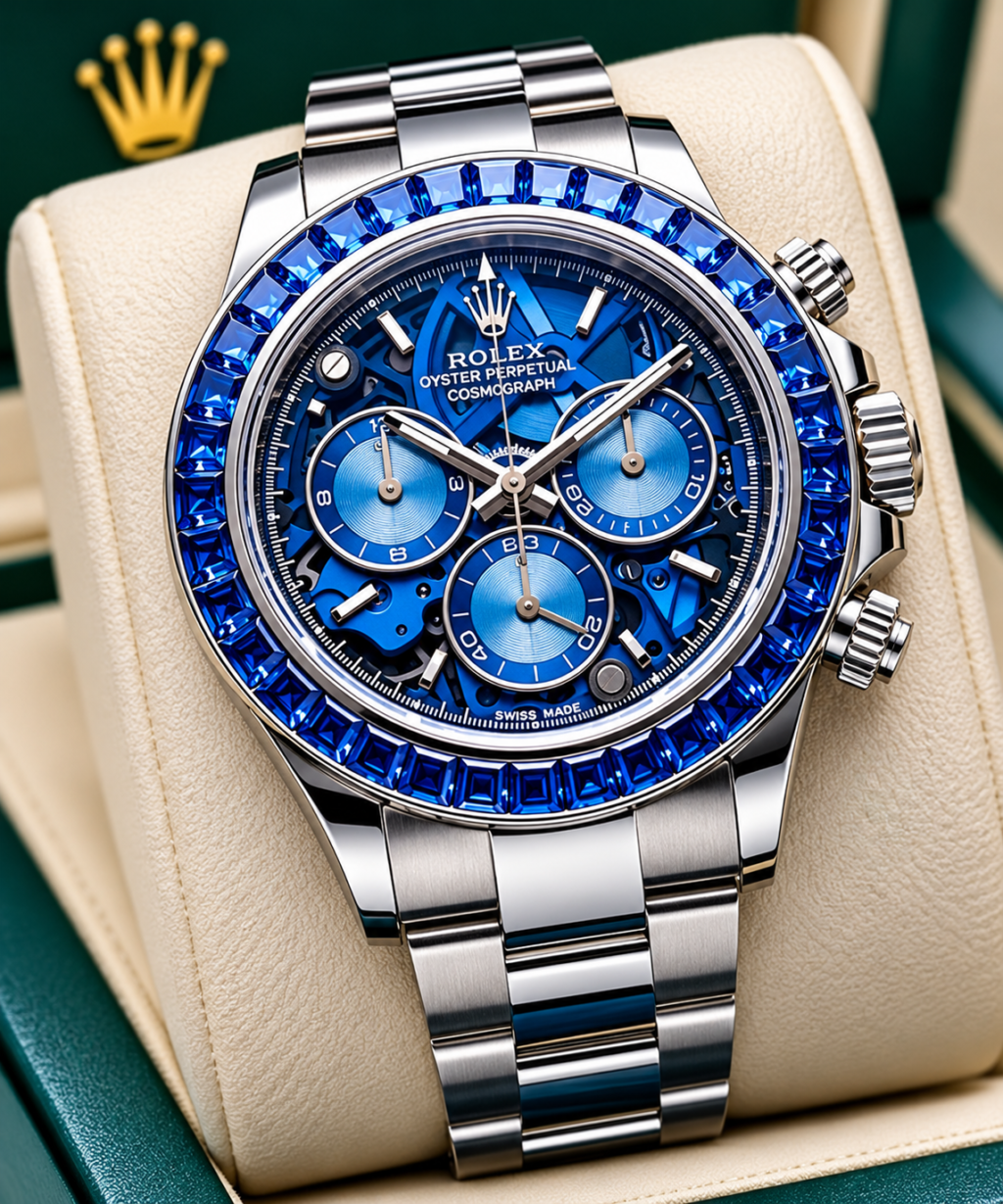
The Blue Sapphire Chronograph Watch represents a distinctive combination of sophisticated design, detailed craftsmanship, and modern watchmaking features. Its deep blue dial, sapphire-style decorative bezel, polished silver-tone bracelet, and multiple chronograph subdials create an elegant appearance that attracts attention while maintaining a balanced and refined character.
Blue has become one of the most recognizable colors in contemporary watch design. It offers a combination of depth, versatility, and elegance that complements different materials and finishes. When paired with silver-colored stainless steel and gemstone-inspired details, a blue dial creates a striking contrast that works well in both formal and casual settings.
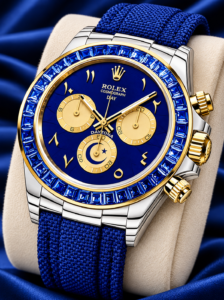
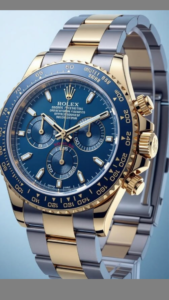
The design featured in this guide includes a richly colored blue dial, three chronograph-style subdials, metallic hands, applied hour markers, and a bezel decorated with rectangular blue elements. The coordinated case and bracelet complete its overall appearance.
However, a quality wristwatch should be evaluated through more than its visual appeal. Its movement, material composition, accuracy, durability, comfort, functionality, and maintenance requirements are equally important.
Understanding these characteristics helps buyers make informed decisions and recognize the differences between decorative luxury-inspired watches and technically advanced chronograph timepieces.
This comprehensive guide explores the design, materials, movement technology, chronograph functions, construction quality, maintenance, and purchasing considerations associated with blue sapphire-style chronograph watches.
1. The Design and Appeal of Blue Sapphire Watches
The first characteristic that distinguishes a Blue Sapphire Chronograph Watch is its coordinated blue appearance. The combination of a deep blue dial and gemstone-inspired bezel creates a distinctive design that differs from traditional black, white, and silver watches.
The dial provides the main visual surface, while the bezel frames it and gives the watch a more decorative appearance.
Blue is particularly interesting in watchmaking because it can appear different under various lighting conditions. A dark blue dial may look almost navy in low light, while brighter illumination can reveal lighter shades and reflective patterns.
Several design characteristics contribute to its appeal:
- Deep blue tones create visual depth.
- Metallic markers provide contrast and improve readability.
- Decorative bezel elements add texture and brilliance.
- Silver-tone finishing complements the blue color.
- Multiple subdials create a detailed chronograph appearance.
The overall result is a timepiece style that combines traditional wristwatch proportions with a more contemporary decorative character.
2. Understanding the Blue Sapphire Bezel
The bezel is the circular component surrounding the watch dial. It can serve decorative or functional purposes depending on the watch’s design.
In a Blue Sapphire Chronograph Watch, the bezel may feature rectangular blue stones arranged around its circumference. These elements reflect light and create a brilliant border around the dial.
The quality of a decorative bezel depends on several factors, including the material, setting technique, alignment, finishing, and overall construction.
Different Materials Used in Blue Bezels
Natural Sapphire: Natural sapphires are gemstones valued for their hardness, color, and durability. Their quality depends on characteristics such as color, clarity, cut, and origin.
Laboratory-Created Sapphire: These gemstones are produced under controlled conditions and have essentially the same chemical composition and crystal structure as natural sapphire.
Synthetic Decorative Stones: Other manufactured materials may be used to create a similar blue appearance at different price points.
Colored Crystal: Decorative crystals can produce attractive reflective effects without being genuine sapphires.
Buyers should distinguish between sapphire-colored decoration and actual sapphire gemstones. A blue bezel does not automatically indicate that genuine sapphires have been used.
A carefully finished bezel should have consistent spacing, secure settings, smooth edges, and properly aligned decorative elements.
3. Blue Dial Construction and Readability
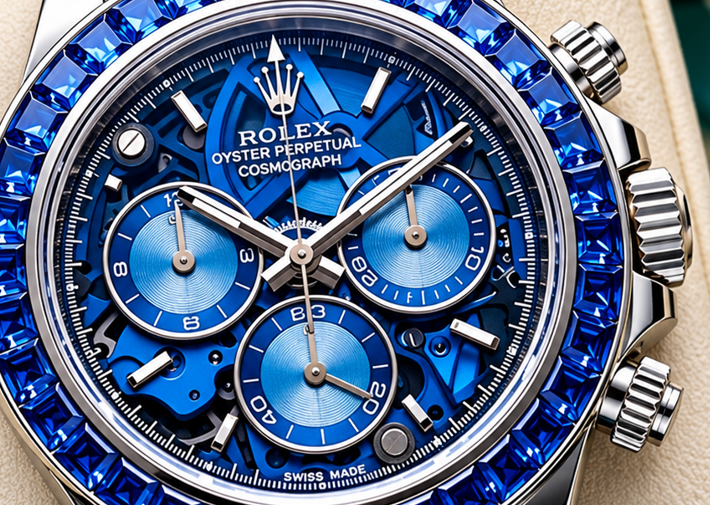
The dial is one of the most important components of a wristwatch because it communicates the time and displays additional information.
A detailed blue chronograph dial may contain several layers, textures, and markings. Each component should have a clear purpose and contribute to overall readability.
Important Dial Components
Hour Markers: Applied or printed markers indicate the twelve-hour positions. Metallic markers create contrast against the blue background.
Hour and Minute Hands: These hands display the current time. Their length, shape, and positioning are important for accurate reading.
Seconds Display: Depending on the movement, a separate seconds hand or chronograph hand may be used.
Chronograph Subdials: These smaller displays provide additional timing information.
Minute Track: The outer markings help users estimate the time more precisely.
Dial Finish: Sunburst, brushed, polished, or textured surfaces create different visual effects.
A sunburst dial, for example, reflects light from its center toward the edges. This creates a changing appearance as the watch moves.
Good dial design balances decoration with readability. Excessive visual elements can make it difficult to distinguish the time and individual functions.
4. Chronograph Technology Explained
A chronograph is a watch function designed to measure elapsed time independently of normal timekeeping.
It is particularly useful when someone needs to measure the duration of an activity without using a separate stopwatch.
A typical chronograph includes:
- A central stopwatch seconds hand.
- A subdial for elapsed minutes.
- A subdial for elapsed hours on some models.
- Pushers for controlling stopwatch functions.
- A reset mechanism.
Not every chronograph has the same arrangement. Some movements use two subdials, while others use three or more displays.
How Does a Chronograph Operate?
On many conventional chronographs, the upper pusher starts the stopwatch mechanism. Pressing it again stops the measurement.
After stopping the chronograph, the lower pusher generally resets the stopwatch hands to their starting positions.
The crown normally controls the watch’s time-setting functions.
However, operation varies by movement. Manufacturers provide instructions explaining the correct sequence and any limitations.
Practical Uses of Chronograph Functions
A functional chronograph can help with:
- Measuring exercise intervals.
- Timing cooking activities.
- Recording the duration of meetings.
- Measuring short travel intervals.
- Tracking sports activities.
- Timing everyday tasks.
A chronograph is therefore more than a decorative dial arrangement when its additional displays are connected to a working stopwatch mechanism.
5. Understanding the Three Subdials
Many chronograph watches use three smaller displays to organize timing information.
Their exact functions depend on the movement, but common configurations include the following:
Small Seconds: This subdial displays the continuously running seconds of normal timekeeping.
30-Minute Counter: This display records elapsed minutes when the chronograph is operating.
12-Hour Counter: This display records longer elapsed periods.
Some movements use different counter ranges or arrangements. Therefore, buyers should consult the technical documentation for the exact model.
Understanding these displays is important because not every small dial performs the same function.
A genuine functional chronograph should have properly operating counters and controls that correspond to its advertised specifications.
6. Stainless Steel Case and Bracelet Construction
The silver-tone case and bracelet create a balanced contrast with the blue dial and decorative bezel.
Stainless steel is widely used in watchmaking because of its strength, corrosion resistance, and suitability for everyday wear.
However, different grades of stainless steel have different properties. Buyers should check the actual material specification rather than relying only on a product photograph.
Case Construction
The case protects the movement and connects several important components, including the bezel, crystal, crown, pushers, and case back.
A well-constructed case should provide:
- Secure component fitting.
- Consistent surface finishing.
- Proper crown and pusher alignment.
- Suitable protection for the movement.
- Comfortable wrist proportions.
Bracelet Construction
The bracelet affects both comfort and the overall appearance of the watch.
A quality metal bracelet should have properly aligned links, secure connections, smooth edges, and a reliable clasp.
Some designs combine polished center links with brushed outer surfaces. This contrast creates additional visual depth.
Important bracelet features include:
- Link flexibility.
- Secure pins or screws.
- Reliable clasp operation.
- Appropriate adjustment options.
- Consistent finishing.
- Comfortable contact with the wrist.
A bracelet should be adjusted according to wrist size. Excessive tightness can cause discomfort, while excessive looseness may allow unnecessary movement.
7. Sapphire Crystal and Scratch Protection
The crystal is the transparent protective component covering the dial.
Sapphire crystal is widely used in higher-quality watches because it offers excellent scratch resistance compared with many ordinary watch glasses.
It is important to understand that sapphire crystal and sapphire gemstones are different materials used for different purposes.
Sapphire crystal protects the dial, while decorative sapphire gemstones may be used in the bezel.
Benefits of Sapphire Crystal
Scratch Resistance: Sapphire crystal is highly resistant to everyday scratches, although it can still be damaged by certain impacts.
Visual Clarity: A properly manufactured crystal provides a clear view of the dial.
Long-Term Appearance: Its scratch-resistant properties help preserve the appearance of the watch during regular use.
Anti-Reflective Coating: Some watches feature a special coating that reduces reflections and improves visibility.
Buyers should also consider crystal shape and construction because these influence the overall appearance and protection of the watch.
8. Quartz and Mechanical Chronograph Movements
The movement is the internal mechanism responsible for keeping time and operating the watch’s additional functions.
Movement quality is one of the most important factors when evaluating a chronograph.
There are two major categories to understand.
Quartz Chronograph Movement
Quartz movements use an electronic oscillator regulated by a quartz crystal. Most conventional quartz watches are powered by a battery.
They are popular because of their convenient operation and generally straightforward maintenance.
Common advantages include:
- Consistent timekeeping.
- Convenient everyday operation.
- Practical stopwatch functionality.
- Generally lower routine maintenance requirements.
- No regular manual winding in standard battery-powered models.
The battery eventually needs replacement. During battery changes, the watch’s seals should also be inspected when appropriate.
Mechanical Chronograph Movement
Mechanical chronographs use an intricate arrangement of springs, gears, levers, and other precision components.
They may be powered by manual winding or an automatic winding mechanism.
Mechanical chronographs are appreciated by enthusiasts because they demonstrate traditional watchmaking techniques and complex engineering.
Their characteristics include:
- Intricate mechanical construction.
- Traditional movement architecture.
- Manual or automatic winding options.
- Mechanical stopwatch functionality.
- Periodic professional servicing.
Which Movement Is Better?
Neither movement type is universally better.
Quartz chronographs are suitable for people who prioritize convenient operation and straightforward maintenance.
Mechanical chronographs may appeal to enthusiasts who appreciate traditional engineering and the craftsmanship involved in mechanical watchmaking.
The best choice depends on budget, preferences, intended use, and maintenance expectations.
9. Accuracy and Timekeeping Performance
Accuracy is an important consideration when selecting any wristwatch.
A watch’s timekeeping performance depends on its movement type, construction, regulation, environmental conditions, and maintenance.
Quartz watches generally provide consistent timekeeping because their oscillator is electronically regulated.
Mechanical movements may experience variations due to factors such as position, temperature, magnetism, and mechanical condition.
Some mechanical watches are regulated and tested according to specific accuracy standards. However, performance varies between movements and individual watches.
Buyers should review the manufacturer’s accuracy specifications rather than assuming that all watches provide identical results.
Regular servicing also helps maintain reliable performance, especially in mechanical chronographs.
10. Power Reserve and Battery Life
Power reserve refers to how long a mechanical watch can continue operating after being fully wound, without additional winding.
Automatic movements receive energy through the movement of the wearer’s wrist, while manual movements require winding through the crown.
The actual power reserve depends on the movement’s design and specifications.
Quartz watches operate differently. Their batteries provide the electrical energy required to operate the movement.
Battery life depends on movement design, battery capacity, chronograph usage, and other functions.
For buyers, understanding these differences helps establish realistic expectations regarding daily operation and maintenance.
11. Water Resistance and Everyday Protection
Water resistance is another important feature to examine before purchasing a watch.
A watch’s water resistance depends on the complete case construction, seals, crown, pushers, crystal installation, and case back.
A decorative blue bezel or sapphire crystal does not automatically make a watch suitable for swimming or diving.
Water-resistance ratings are generally expressed in meters, atmospheres, or bar.
The manufacturer’s stated rating and usage instructions should always be followed.
Chronograph pushers require particular attention because operating them underwater may compromise water resistance on many designs.
If a watch has not been tested recently or has damaged seals, it should not be assumed to retain its original water resistance.
12. Date Display and Additional Watch Features
Some chronograph watches include a date window that displays the current calendar date.
A magnifying lens may be positioned above the date display to make the numbers easier to read.
Other possible features include:
- Luminous hands.
- Luminous hour markers.
- Screw-down crowns.
- Anti-reflective crystal coatings.
- Different water-resistance ratings.
- Automatic or manual winding.
- Additional timing displays.
Not every model includes these features.
Buyers should verify each function through the manufacturer’s documentation and avoid relying on visual appearance alone.
13. Comfort, Case Size, and Bracelet Fit
A watch should look attractive and feel comfortable during extended wear.
Case diameter, thickness, bracelet width, weight, and clasp design all affect wrist comfort.
A large chronograph may create a stronger visual presence, but its proportions should suit the wearer’s wrist.
Important considerations include:
Case Diameter: Determines the overall width of the watch.
Case Thickness: Affects how the watch sits on the wrist and fits beneath shirt cuffs.
Bracelet Width: Influences the visual balance between the case and bracelet.
Overall Weight: Metal watches may feel heavier than leather or fabric alternatives.
Clasp Design: A secure and comfortable clasp helps keep the watch properly positioned.
Adjustment System: Removable links or suitable adjustment mechanisms improve fit.
A professional bracelet adjustment can improve comfort and help prevent unnecessary movement.
14. Styling a Blue Sapphire Chronograph Watch
Blue and silver are versatile colors that complement different clothing styles.
A Blue Sapphire Chronograph Watch can serve as a noticeable accessory while maintaining a coordinated appearance.
Formal Clothing
For formal occasions, the blue dial and silver-tone bracelet can complement tailored suits, dress shirts, and evening clothing.
Navy, charcoal, black, and grey are particularly suitable combinations.
Business Casual Clothing
The watch can be paired with a blazer, button-down shirt, chinos, or a simple sweater.
Its metallic bracelet adds a refined detail, while the blue dial introduces a subtle touch of color.
Everyday Clothing
For casual styling, it can complement jeans, plain shirts, and smart-casual outfits.
Because a gemstone-style bezel can attract attention, simpler clothing and accessories may create a more balanced appearance.
The final choice depends on personal taste and the watch’s proportions.
15. How to Choose a Quality Blue Sapphire Chronograph
Selecting a quality watch requires careful attention to specifications, materials, and construction.
Product photographs can communicate the design, but they cannot establish the quality of internal components or confirm gemstone authenticity.
Consider the following points before making a purchase.
Movement: Confirm whether the watch uses a quartz, automatic, or manual mechanical movement.
Chronograph Functions: Check whether all advertised counters and pushers operate correctly.
Bezel Material: Determine whether the decorative elements are genuine gemstones, synthetic stones, or colored crystals.
Case Material: Review the actual stainless steel grade or other specified material.
Crystal: Confirm whether the watch uses sapphire crystal or mineral glass.
Bracelet: Examine link construction, clasp security, and adjustment options.
Water Resistance: Check the official rating and recommended usage.
Warranty: Review the warranty conditions and servicing arrangements.
Seller Reliability: Purchase through reputable sellers who provide accurate product information and clear return policies.
Authenticity: For watches advertised under a recognized brand, verify their identity and documentation through appropriate channels.
These checks help buyers avoid misleading descriptions and make better-informed decisions.
16. Blue Sapphire Chronograph vs. Standard Blue Dial Watch
Both styles offer an attractive blue appearance, but they differ in design and potential functionality.
A standard blue dial watch generally focuses on basic timekeeping. It may use three hands and a relatively simple display.
A blue sapphire-style chronograph usually has a more detailed appearance, additional subdials, stopwatch controls, and decorative bezel elements.
| Feature | Standard Blue Dial Watch | Blue Sapphire Chronograph |
|---|---|---|
| Dial | Usually simple | Often detailed |
| Bezel | Plain or decorative | May feature gemstone-style details |
| Functions | Basic timekeeping | May include stopwatch |
| Appearance | Classic and minimal | Elaborate and distinctive |
| Bracelet | Various materials | Often metal in this design |
| Styling | Everyday and formal | Sporty and luxurious |
Neither design is automatically better. The right option depends on individual preferences and practical requirements.
17. Maintenance and Long-Term Care
Regular maintenance helps preserve a watch’s appearance and performance.
Even durable materials can develop marks or damage through improper handling.
The following practices can help maintain a wristwatch.
Regular Cleaning: Use a soft microfiber cloth to remove fingerprints, dust, and surface marks.
Avoid Harsh Chemicals: Perfumes, solvents, cleaning products, and other chemicals may damage certain finishes or seals.
Safe Storage: Keep the watch in a clean, dry location away from unnecessary pressure and impacts.
Crystal Protection: Avoid contact with hard surfaces that could damage the glass.
Bracelet Inspection: Check links, clasp connections, and adjustment components periodically.
Water Resistance Testing: Have the seals inspected according to the manufacturer’s recommendations.
Movement Servicing: Mechanical chronographs require periodic professional maintenance.
Battery Replacement: Quartz models need battery replacement when required. The seals should be checked during appropriate servicing.
Gemstone Inspection: Decorative bezel elements should be examined to ensure that their settings remain secure.
A watch that receives appropriate care is more likely to maintain its appearance and provide dependable performance over time.
18. Factors That Influence Watch Value
The value of a watch depends on several factors rather than appearance alone.
Movement quality, materials, finishing, craftsmanship, brand reputation, condition, documentation, and production history can all influence its market value.
Genuine natural gemstones may affect the price differently from synthetic stones or colored crystals.
Similarly, a mechanical chronograph generally involves different engineering and servicing requirements from a basic quartz model.
Buyers should compare verified specifications and reliable market information before evaluating a watch’s price.
A recognizable logo or attractive photograph is not enough to establish authenticity or value.
19. Who Should Consider This Watch Style?
A Blue Sapphire Chronograph Watch may appeal to different types of watch enthusiasts.
Luxury Watch Enthusiasts: People who appreciate detailed dials, polished metal, and gemstone-inspired decoration may enjoy this design.
Chronograph Collectors: Those interested in stopwatch technology may prefer models with genuine functional chronograph mechanisms.
Blue Dial Enthusiasts: People who enjoy blue accessories may appreciate the contrast between deep and lighter blue tones.
Formal Style Enthusiasts: The silver and blue combination can complement business and evening clothing.
Design-Focused Buyers: People who prefer distinctive accessories may find decorative bezels particularly appealing.
Ultimately, the right watch should reflect personal preferences while meeting expectations for quality, comfort, and functionality.
Frequently Asked Questions
1. What is a Blue Sapphire Chronograph Watch?
It is a watch style featuring a blue dial, sapphire-inspired decorative bezel, and chronograph-style display. Depending on the movement, it may include stopwatch functionality.
2. Are the blue bezel stones genuine sapphires?
Not necessarily. They may be natural sapphires, laboratory-created gemstones, synthetic stones, or colored crystals. Product specifications are needed to confirm their composition.
3. What does a chronograph do?
A chronograph measures elapsed time independently of normal timekeeping. It generally uses additional hands, subdials, and pushers.
4. What are the three chronograph subdials used for?
Depending on the movement, they may display small seconds, elapsed minutes, and elapsed hours.
5. Is sapphire crystal completely scratch-proof?
No. Sapphire crystal is highly scratch-resistant but can still be damaged by certain impacts.
6. Is a blue chronograph suitable for daily wear?
Yes, if its construction, bracelet, movement, and water-resistance rating are suitable for the intended activities.
7. What is the difference between quartz and mechanical chronographs?
Quartz chronographs use electronic timekeeping regulated by a quartz crystal, while mechanical chronographs operate through gears, springs, and other precision components.
8. Does a sapphire bezel mean the watch is waterproof?
No. Water resistance depends on the complete watch construction, seals, crown, pushers, and manufacturer’s rating.
9. How should a blue sapphire-style watch be cleaned?
Use a soft microfiber cloth and follow the manufacturer’s cleaning instructions. Avoid harsh chemicals and water exposure unless the watch is rated for it.
10. Can this watch be worn with formal clothing?
Yes. Its blue and silver combination complements many formal colors, including black, navy, grey, and charcoal.
11. What should buyers check before purchasing?
Examine movement specifications, bezel composition, case material, crystal, bracelet quality, water resistance, warranty, and seller reliability.
12. How long can a quality chronograph watch last?
Its lifespan depends on movement quality, construction, usage, and maintenance. A properly maintained watch can provide reliable service for many years.
13. Does every chronograph have three subdials?
No. Chronograph layouts vary according to movement design. Some models have two subdials, while others use three or more.
14. What is a tachymeter?
A tachymeter is a scale, usually placed around a watch’s bezel or dial, that can be used to calculate speed over a known distance. It is a separate feature and is not present on every chronograph.
15. Why is movement information important?
Movement information helps buyers understand how the watch operates, how accurately it keeps time, what functions it supports, and what maintenance it requires.
Conclusion
The Blue Sapphire Chronograph Watch combines distinctive blue styling, gemstone-inspired decorative details, metallic finishing, and a detailed chronograph display. Its rich blue dial and silver-tone bracelet create an elegant appearance that can complement different clothing styles and occasions.
Beyond its visual appeal, the quality of a timepiece depends on its movement, material specifications, construction, accuracy, functionality, comfort, and maintenance requirements.
Understanding these features allows buyers to compare different watches more effectively, recognize misleading product descriptions, and select a timepiece that meets their individual expectations.
Whether someone appreciates traditional watchmaking, modern decorative designs, or practical chronograph functions, understanding the technology and materials behind a watch makes the selection process more meaningful.
At Rolex PK, our aim is to provide informative watch guides that explain design elements, technical features, materials, and important purchasing considerations.
Ultimately, a well-chosen timepiece should offer an appropriate balance of attractive design, dependable functionality, quality construction, and long-term value.
Focus Keyword: Blue Sapphire Chronograph Watch
SEO Title: Blue Sapphire Chronograph Watch
Meta Description: Discover the Blue Sapphire Chronograph Watch, including its blue dial, sapphire-style bezel, chronograph technology, movement types, materials, maintenance, and buying tips.
Additional Focus Keywords:
- Luxury Blue Chronograph Watch
- Blue Sapphire Bezel Watch
- Blue Dial Luxury Watch
- Men’s Blue Chronograph Watch
- Silver Blue Luxury Watch
- Blue Gemstone Chronograph
- Stainless Steel Chronograph Watch
- List
Hashtags:
#BlueSapphireWatch #BlueChronographWatch #LuxuryWatch #BlueDialWatch #SapphireBezel #MensLuxuryWatch #LuxuryTimepiece
Image Alt Text:
Blue Sapphire Chronograph Watch with Blue Dial, Sapphire Style Bezel and Silver Stainless Steel Bracelet