Gold Chronograph Watch | Luxury Black Dial Style

Introduction to Gold Chronograph Watch | Luxury Black Dial Style
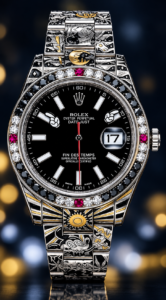
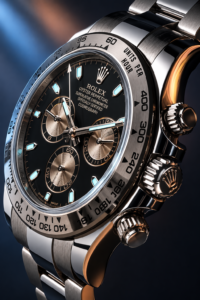
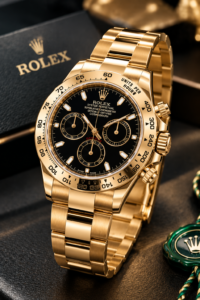
A Gold Chronograph Watch | Luxury Black Dial Style combines the elegant appearance of gold with the bold, timeless character of a black dial. This design appeals to people who appreciate sophisticated accessories, detailed watchmaking, and practical timekeeping features. The contrast between the gold-colored case, dark dial, metallic hour markers, and chronograph subdials creates a distinctive appearance suitable for many occasions.
A gold chronograph watch is more than a decorative accessory. Depending on its construction and movement, it may include a stopwatch function, a tachymeter scale, luminous hands, a metal bracelet, and other features designed to improve its functionality. Understanding these components helps buyers distinguish between a watch that simply looks attractive and one that also meets their practical requirements.
However, not every gold-colored watch is made from solid gold, and not every watch with small subdials has a fully functional chronograph. Materials, movement specifications, water resistance, crystal type, and overall construction can vary significantly between models.
This guide explains how gold chronograph watches work, what makes a black dial attractive, how to compare different materials and movements, what to consider before purchasing, and how to care for a watch over time. It also answers common questions to help readers make informed decisions.
What Is a Gold Chronograph Watch?
A gold chronograph watch is a wristwatch that combines conventional timekeeping with a stopwatch function. The main hands display the current time, while the chronograph mechanism measures elapsed time when activated.
The term chronograph refers to the timing function rather than the material, color, or price of the watch. A chronograph can be made from different materials and can feature many dial designs, including black, white, blue, silver, and other colors.
Gold chronograph watches may feature solid gold, gold plating, a gold-colored coating, or another material with a gold-tone finish. These construction methods are not equivalent. Solid gold contains gold throughout the relevant component, whereas plating and coatings provide a surface finish over another material.
A typical chronograph may have two or three subdials, although the layout depends on the movement. These smaller displays can indicate elapsed seconds, elapsed minutes, elapsed hours, or the continuously running seconds.
The black dial creates contrast against the gold-colored hands and markers, while the chronograph layout gives the watch a technical appearance. Together, these features create a design that combines traditional styling with practical timing functions.

Why Is a Black Dial Popular on Gold Watches?
The combination of a black dial and gold-colored case is popular because it balances contrast, sophistication, and versatility.
1. Strong Contrast and Readability
A black dial provides a dark background for contrasting hands and hour markers. Gold-colored details can stand out clearly, making the dial visually distinctive.
Actual readability depends on the size of the hands, the design of the markers, the crystal’s reflections, and the surrounding light. A contrasting dial may improve visibility, but it does not automatically guarantee excellent legibility in every condition.
2. A Refined Appearance
Gold-colored surfaces can create a warm, polished appearance, while a black dial adds depth. This combination can look appropriate with business clothing, formal outfits, and smart-casual styles.
The final appearance depends on the shade of gold, the finish of the case, the bracelet design, and the dial texture.
3. A Sporty and Technical Design
Chronograph subdials, pushers, and a tachymeter-style bezel give the watch a more technical appearance. These details are associated with elapsed-time measurement and, in some designs, motorsports.
A gold finish introduces a more traditional visual element, creating a balance between sporty styling and formal elegance.
4. Styling Versatility
A gold watch with a black dial can complement black, navy, grey, white, and beige clothing. It can be worn as a statement accessory or incorporated into a more understated outfit.
For formal occasions, a coordinated outfit allows the watch to stand out without appearing excessive. For casual settings, it can add a polished finishing touch.
Main Features of a Gold Chronograph Watch
Understanding the individual components helps buyers assess a watch’s functionality, quality, and suitability.
Black Watch Dial
The dial is the face of the watch. It displays the time through the hands and hour markers and may contain additional indicators for chronograph functions.
Black dials can have matte, glossy, sunburst, or textured finishes. Matte surfaces generally produce fewer reflections, while glossy finishes can create greater visual depth under changing light.
Some models include luminous material on their hands or hour markers. This can help with visibility in low-light conditions, although brightness and duration vary by material and design.
When evaluating a dial, check whether the hands are easy to distinguish, the markers are evenly positioned, and the subdials are readable.
Gold-Colored Case
The case houses the movement and supports the dial, crystal, crown, and pushers. Its material affects weight, durability, finishing, and price.
Common possibilities include:
- Solid gold: A precious metal used in certain luxury watches.
- Gold plating: A layer of gold applied over another material.
- Gold-colored coating: A surface treatment that creates a gold appearance.
- Gold-tone alternative materials: Metals finished to resemble gold without necessarily containing it.
These options can look similar in photographs, but their properties differ. Buyers should verify the actual materials through reliable specifications rather than assuming that a gold-colored case is made from solid gold.
Tachymeter Bezel
A tachymeter is a scale that can be used to calculate average speed over a known distance when paired with a suitable chronograph.
The scale is commonly marked in units per hour. On many chronographs, it appears around the bezel, although its placement varies by design.
For example, if a vehicle travels one kilometre in 30 seconds, a correctly calibrated tachymeter can indicate an average speed of 120 kilometres per hour. This calculation assumes that the distance is known and the scale is being used correctly.
A tachymeter is not the same as a countdown bezel or a rotating elapsed-time bezel. The markings and intended function should be checked for the specific watch.
Chronograph Subdials
Subdials are smaller displays positioned within the main dial. Their functions depend on the movement.
They may show:
- Elapsed seconds measured by the chronograph.
- Elapsed minutes during a timing session.
- Elapsed hours during longer measurements.
- Continuously running seconds for ordinary timekeeping.
Not all chronographs use the same arrangement. Some have two subdials, while others have three or additional displays.
It is also important to confirm that the subdials are functional. Some decorative watches imitate chronograph layouts without providing a working stopwatch mechanism.
Crown and Chronograph Pushers
The crown is generally used to set the time and, where applicable, the date. Chronograph pushers control the stopwatch mechanism.
On many conventional chronographs, one pusher starts and stops timing, while another resets the chronograph after it has stopped. Specialized movements may operate differently.
Always follow the instructions for the specific watch. Do not assume every pusher has the same function, and avoid operating pushers underwater unless the manufacturer explicitly permits it.
Bracelet and Clasp
A gold-tone metal bracelet creates a coordinated appearance with the case. Its quality depends on the materials, link construction, finishing, flexibility, and clasp design.
A comfortable bracelet should sit securely without pinching the wrist. The clasp should close properly and remain secure during normal activities.
Buyers should check whether the links are solid or folded, whether the bracelet can be adjusted, and whether replacement links are available.
Watch Crystal
The crystal protects the dial from everyday contact and environmental exposure.
Mineral glass and sapphire crystal are two common options. Sapphire is generally more scratch-resistant than mineral glass, although it can still be damaged by a sufficiently hard impact. Mineral glass can offer practical everyday protection at a different price point.
Neither material is completely damage-proof. Check the manufacturer’s specifications rather than assuming that a luxury-looking watch has a sapphire crystal.
How Does a Chronograph Watch Work?
A chronograph measures elapsed time separately from the watch’s normal time display.
On a typical model, pressing the start pusher activates the timing mechanism. Pressing the appropriate pusher again stops the measurement. The elapsed time can then be read from the central chronograph hand and relevant subdials.
A reset pusher returns the chronograph indicators to their starting positions after the timing session has stopped.
The exact operating sequence depends on the movement. Some advanced chronographs have additional features, so the manufacturer’s instructions should always take priority.
Practical Uses of a Chronograph
A chronograph can be useful for:
- Measuring the duration of meetings and presentations.
- Timing cooking and household activities.
- Recording exercise intervals.
- Measuring elapsed time during travel.
- Calculating average speed over a known distance when a suitable tachymeter scale is available.
A chronograph does not automatically replace specialized measuring equipment. Its accuracy depends on the movement, the condition of the watch, and the purpose of the measurement.
Understanding Watch Movements
The movement is the mechanism responsible for keeping time and operating the watch’s functions. Gold chronograph watches may use mechanical, automatic, or quartz movements.
Mechanical Movement
A mechanical movement uses springs, gears, and other precision components to measure time. It does not rely on a conventional quartz timekeeping circuit.
Mechanical watches appeal to people who appreciate traditional engineering and the movement of interconnected components. Their accuracy depends on the design, condition, regulation, and operating environment.
They also require appropriate maintenance and may be more expensive to service than simpler watches.
Automatic Movement
An automatic movement is a type of mechanical movement that winds itself through the motion of the wearer’s wrist. Many automatic watches can also be wound manually.
Automatic chronographs combine mechanical timekeeping with stopwatch functionality. Their mechanisms can be complex, so professional servicing may be necessary over time.
If an automatic watch is left unworn for an extended period, its power reserve may run down. The correct method for restarting and setting it depends on the model.
Quartz Movement
A quartz movement uses an electronic circuit regulated by a vibrating quartz crystal. Many quartz watches use a battery, although alternative power systems also exist.
Quartz chronographs are often valued for convenience and good everyday accuracy. Depending on the design, maintenance may involve battery replacement and periodic inspection.
Which Movement Should You Choose?
The best movement depends on your preferences and intended use.
Choose a mechanical or automatic model if you appreciate traditional watchmaking and are comfortable with its maintenance requirements. Consider quartz if convenience and straightforward timekeeping are your main priorities.
Compare the manufacturer’s accuracy specifications, power reserve where applicable, service requirements, and available repair support before making a decision.
What Materials Are Used in Gold Chronograph Watches?
The materials used in a watch affect its appearance, durability, comfort, and price.
Case Materials
Gold, stainless steel with a gold finish, and other metal alloys may be used in different models. Each has different properties and maintenance requirements.
Solid gold is a precious metal, but its value and durability depend on the gold alloy and component construction. Gold plating provides a gold surface without making the entire underlying component solid gold.
Bracelet Materials
Metal bracelets can use solid links, folded links, different finishes, and various clasp designs. These differences influence flexibility, comfort, repairability, and overall construction quality.
A gold-colored bracelet should be evaluated separately from the case because the materials and finishes may not always be identical.
Crystal Materials
Sapphire and mineral glass are common crystal options. Sapphire generally offers stronger scratch resistance, while mineral glass is used in many watches across different price categories.
The best choice depends on the watch’s specifications, intended use, and budget.
Strap Alternatives
Some gold chronographs use leather, rubber, or other non-metal straps instead of a bracelet. Leather may complement formal clothing, while rubber can suit a more casual or sporty design.
If replacing a strap or bracelet, confirm the correct attachment width, compatibility, and manufacturer recommendations.
How to Choose the Right Gold Chronograph Watch
A thoughtful buying process can help you avoid paying for features you do not need.
1. Define Your Budget
Decide how much you are comfortable spending, including any potential maintenance costs.
Compare watches with similar specifications and consider the total ownership cost rather than focusing exclusively on the initial purchase price.
2. Verify the Materials
Check whether the watch uses solid gold, gold plating, a gold-colored coating, or another material.
If the listing is unclear, request written specifications from the seller. Photographs alone cannot reliably establish the metal composition.
3. Choose the Correct Size
Consider case diameter, thickness, lug-to-lug length, bracelet width, and overall weight.
A large chronograph may create a bold appearance but feel bulky on a smaller wrist. If possible, try the watch on or compare its dimensions with a watch that already fits comfortably.
4. Examine the Dial
Check the readability of the hands, hour markers, and subdials. Look for consistent finishing, clear markings, and a layout that is easy to understand.
If you want to use the chronograph regularly, make sure the relevant displays are functional and that their purpose is explained in the documentation.
5. Check the Movement
Identify whether the watch is mechanical, automatic, or quartz.
For a pre-owned mechanical watch, request service records where available. For a quartz model, confirm that the chronograph operates correctly and check the power requirements.
6. Understand Water Resistance
Review the official water-resistance rating and the manufacturer’s usage instructions.
Water resistance can deteriorate as seals age or after repairs. A watch suitable for everyday splashes is not necessarily suitable for swimming or diving.
7. Review the Warranty
Check what the warranty covers, how long it lasts, and whether repairs must be carried out by an authorized service provider.
For pre-owned watches, also review the return policy, condition report, service history, and availability of replacement parts.
8. Assess the Seller
Buy from a reputable retailer or specialist with clear contact information, documented policies, and a reliable returns process.
Be cautious of unsupported authenticity claims, unclear product descriptions, and prices that appear unusually low for the stated model.
How Much Does a Gold Chronograph Watch Cost?
The price of a gold chronograph watch varies considerably. There is no single price that applies to every model.
Several factors influence the cost:
- Materials: Solid gold, gold plating, and gold-colored coatings have different material costs.
- Movement: Mechanical complications can increase manufacturing and servicing costs.
- Brand and model: Established brands may charge different prices depending on design, demand, and production.
- Construction quality: Case finishing, bracelet construction, crystal material, and component quality can influence value.
- Condition: For pre-owned watches, scratches, mechanical condition, originality, and service history affect the price.
- Warranty and documentation: Included services and documentation may influence the overall purchase proposition.
- Availability: Supply, demand, and regional market conditions can change prices.
To compare prices fairly, evaluate watches with similar materials, functions, conditions, and warranty coverage. Do not assume that a gold-colored finish indicates solid gold or that a higher price guarantees superior quality.
For an expensive purchase, independent verification and a clear written description are particularly important.
How to Check a Luxury Watch’s Authenticity
A watch’s appearance alone cannot prove that it is authentic. Counterfeit products can imitate dial markings, case shapes, bracelets, packaging, and other visible details.
If a watch is advertised as an authentic branded model, take the following precautions:
- Purchase from an authorized retailer or a reputable specialist.
- Request available purchase documents, service records, and a written authenticity guarantee.
- Have the watch examined by an appropriately qualified watchmaker or authorized service provider.
- Confirm that the model reference, movement, serial information, and components are consistent with the manufacturer’s specifications.
- Check the seller’s return policy and dispute process.
- Be cautious of unusually low prices and claims that cannot be independently supported.
A box, certificate, or matching serial number should not be treated as conclusive proof on its own. Documentation can be incomplete, altered, or associated with another watch.
For a Rolex-branded watch, verify the individual timepiece and its provenance rather than relying solely on photographs, packaging, or advertising language.
Is a Gold Chronograph Watch Suitable for Everyday Wear?
A gold chronograph can be suitable for daily use if its weight, fit, materials, and functionality meet your needs.
A metal bracelet may provide a secure fit and coordinated appearance. A black dial can also work with a range of clothing styles.
However, there are practical considerations. A large case may feel heavy, a plated finish may wear with friction, and a mechanical movement may need professional maintenance.
Before wearing a watch every day, consider its comfort, crystal material, water resistance, clasp security, and suitability for your normal activities.
For office work and ordinary daily use, many designs may be appropriate. For swimming, diving, or demanding outdoor activities, confirm that the specific model is designed for those conditions.
How to Style a Gold Chronograph Watch
A gold chronograph with a black dial can complement several clothing styles.
Formal Styling
Pair the watch with a well-fitted suit, a dress shirt, or another formal outfit. Keep other accessories relatively simple so the watch complements the overall look.
Business and Smart-Casual Styling
A gold chronograph can work with a navy blazer, neutral trousers, and a plain shirt. The black dial can coordinate naturally with darker clothing and accessories.
Casual Styling
For casual occasions, consider a polo shirt, a dark sweater, or a simple jacket. The watch can add a refined detail without requiring an elaborate outfit.
Coordinating Accessories
You can coordinate the general tone of your watch with other metallic accessories, but exact color matching is not necessary.
Choose a size and design that feel comfortable and appropriate for the occasion. Personal preference matters more than following rigid styling rules.
How to Clean and Maintain a Gold Chronograph Watch
Regular care can help preserve a watch’s appearance and performance.
Clean the Exterior Gently
Use a soft cloth to remove fingerprints and dust. Follow the manufacturer’s cleaning instructions, particularly if the watch has a plated finish or uncertain water resistance.
Avoid abrasive materials, harsh chemicals, and unnecessary polishing. If water resistance is unknown, avoid wet cleaning until the watch has been assessed.
Protect the Finish
Gold plating and other coatings can wear through repeated friction. Avoid contact with rough surfaces, abrasive cleaning products, and chemicals that may damage the finish.
Solid gold can also develop scratches, so careful handling is useful regardless of the material.
Store the Watch Correctly
Keep the watch in a clean, dry place away from excessive heat and direct sunlight. A suitable watch box can help prevent accidental scratches and reduce exposure to dust.
Keep the watch away from strong magnetic sources when the movement’s design makes it susceptible to magnetic interference.
Follow Servicing Recommendations
Mechanical chronographs contain multiple interacting components that may require professional servicing. The appropriate interval depends on the movement, manufacturer’s recommendations, condition, and usage.
If the watch develops significant timekeeping problems, the chronograph stops operating correctly, or moisture appears beneath the crystal, consult a qualified watchmaker.
Check Water Resistance
Seals can deteriorate with age. If the watch is frequently exposed to water, arrange checks according to the manufacturer’s guidance.
Never assume that a watch remains water-resistant simply because it originally had a particular rating.
Common Buying Mistakes to Avoid
Understanding common mistakes can help you choose a more suitable watch.
Assuming every gold-colored watch is solid gold: Always confirm the material specifications.
Buying based on photographs alone: Images cannot reliably establish authenticity, movement quality, or the condition of a pre-owned watch.
Ignoring the case size: A watch that looks attractive may not fit comfortably.
Overlooking maintenance costs: Some mechanical chronographs require specialist servicing.
Assuming every chronograph is functional: Confirm that the pushers and timing displays operate correctly.
Ignoring water-resistance limits: Check the manufacturer’s guidance before exposing the watch to water.
Trusting unsupported luxury claims: Verify brand, model, materials, and documentation before paying a premium price.
Choosing appearance over usability: A watch should suit your daily routine, budget, and practical requirements as well as your personal style.
Advantages and Limitations of a Gold Chronograph Watch
Advantages
- Gold and black create a distinctive visual contrast.
- A functional chronograph can measure elapsed time.
- The design can complement formal and smart-casual clothing.
- Different movement types provide options for different preferences.
- Subdials and a tachymeter scale can add useful functionality.
- A coordinated metal bracelet can create a consistent appearance.
Limitations
- A metal bracelet and large case may feel heavy.
- Plated or coated surfaces may wear with repeated friction.
- Mechanical chronographs can require specialist maintenance.
- Water resistance varies by model and condition.
- Luxury models and replacement components may be expensive.
- Multiple subdials can make a dial more complicated to read.
The importance of these advantages and limitations depends on how you plan to use the watch.
Gold Chronograph Watch vs. Standard Gold Watch
A standard gold watch generally focuses on displaying the time, while a chronograph adds a stopwatch function.
A conventional three-hand watch often has a simpler dial and fewer controls. It may be a suitable choice for buyers who prefer straightforward timekeeping and a clean appearance.
A chronograph generally includes additional subdials and pushers. These features provide elapsed-time measurement and create a more technical design.
Neither type is automatically better. A standard watch may suit someone who values simplicity, while a chronograph may appeal to someone who wants additional timing functions.
Compare comfort, movement, maintenance, design, and price before deciding which style meets your needs.
Frequently Asked Questions
1. What is a gold chronograph watch?
A gold chronograph watch combines standard timekeeping with a stopwatch function and a gold or gold-colored appearance. Depending on the model, it may include subdials, timing pushers, and a tachymeter scale.
2. Is a gold chronograph watch made from real gold?
Not necessarily. It may use solid gold, gold plating, a gold-colored coating, or another material. Check the manufacturer’s specifications to determine the actual composition.
3. What does the black dial add to the design?
A black dial creates contrast against gold-colored hands, markers, and case materials. It offers a distinctive appearance that can complement many clothing styles.
4. What do the small dials mean?
The small displays are called subdials. Depending on the movement, they may show elapsed seconds, minutes, hours, or the watch’s continuously running seconds.
5. What is the purpose of a tachymeter?
A tachymeter can help calculate average speed over a known distance when used with a suitable chronograph. Its markings commonly represent units per hour.
6. Is a chronograph the same as a stopwatch?
A chronograph is a watch that incorporates a stopwatch function while continuing to display the time. A separate stopwatch is primarily designed to measure elapsed time.
7. Which movement is best for everyday use?
Quartz movements are often convenient for everyday timekeeping, while mechanical and automatic movements appeal to people who appreciate traditional watchmaking. The best choice depends on your preferences, budget, and maintenance requirements.
8. Are all chronograph subdials functional?
No. Some watches have decorative subdials. Check the specifications and test the functions when possible before purchasing.
9. Can I wear a gold chronograph watch in water?
That depends on the exact model, its water-resistance rating, and its condition. Follow the manufacturer’s instructions and do not operate the pushers underwater unless explicitly permitted.
10. Is sapphire crystal better than mineral glass?
Sapphire is generally more scratch-resistant, while mineral glass is another practical option used in many watches. Both can be damaged, and the best choice depends on the intended use and specifications.
11. How do I choose the correct watch size?
Consider case diameter, thickness, lug-to-lug length, bracelet width, and overall weight. Trying on the watch or comparing its dimensions with a comfortable existing watch can help.
12. How much does a gold chronograph watch cost?
The price varies according to the materials, movement, brand, condition, construction, and warranty. Compare models with similar specifications rather than assuming that color or price alone indicates quality.
13. How often should a chronograph watch be serviced?
The recommended service interval depends on the movement, manufacturer, condition, and use. Follow the manufacturer’s guidance and seek professional assistance if performance changes.
14. How should I clean a gold-colored watch?
Use a soft cloth and follow the manufacturer’s cleaning instructions. Avoid harsh chemicals and abrasive materials, especially on plated or coated finishes.
15. How can I verify authenticity?
Buy from a reputable source, review available documentation, compare the watch with official specifications, and arrange a professional inspection when appropriate. Packaging alone cannot prove authenticity.
16. Does a chronograph improve the watch’s timekeeping accuracy?
Not necessarily. A chronograph adds a timing function, while ordinary timekeeping accuracy depends on the movement and its condition.
17. Is a gold chronograph suitable as a gift?
It can be a thoughtful gift for someone who appreciates watches and the gold-and-black design. Consider the recipient’s style, wrist size, preferred movement, and budget before buying.
18. What should I check when buying a pre-owned chronograph?
Inspect the condition, movement, chronograph functions, bracelet, crystal, documentation, service history, and seller’s return policy. A qualified watchmaker can help assess the watch’s condition and authenticity.
Conclusion
A Gold Chronograph Watch | Luxury Black Dial Style combines the visual appeal of gold with the contrast of a black dial and the functionality of chronograph timekeeping. Depending on the model, its subdials, pushers, and tachymeter scale can provide practical timing features while contributing to a distinctive appearance.
Choosing the right watch requires careful consideration of more than color and design. Material composition, movement type, case dimensions, comfort, water resistance, maintenance requirements, and authenticity all influence its suitability and long-term ownership costs.
By understanding these factors, buyers can compare available models more confidently, avoid common purchasing mistakes, and select a watch that fits their personal preferences and practical needs.
For readers exploring luxury-style watches through Rolex PK, accurate product information is essential. Every product description should clearly identify the actual materials, functions, and specifications of the individual watch. Brand names, authenticity claims, and technical features should only be stated when they can be supported by reliable information.
Article Detail Box
| Detail | Information |
|---|---|
| Article Title | Gold Chronograph Watch | Luxury Black Dial Style |
| Primary Focus Keyword | Gold Chronograph Watch |
| Secondary Keywords | Luxury Gold Chronograph Watch, Gold Watch with Black Dial, Luxury Chronograph Wristwatch |
| Main Topic | Gold chronograph watches with black dials |
| Watch Design | Gold-colored case and bracelet with a black dial |
| Main Features | Chronograph function, subdials, gold-tone finish, tachymeter scale where applicable |
| Movement Options | Mechanical, automatic, or quartz, depending on the model |
| Crystal Options | Sapphire or mineral glass, depending on the model |
| Main Benefits | Distinctive styling, versatile appearance, elapsed-time measurement |
| Buying Considerations | Materials, movement, fit, water resistance, warranty, authenticity |
| Maintenance | Careful cleaning, suitable storage, and professional servicing when required |
| Intended Audience | Watch enthusiasts and luxury-style watch buyers |
| Website | Rolex PK |
| Content Type | Informational guide and buying advice |
Focus Keywords
- Gold Chronograph Watch
- Luxury Gold Chronograph Watch
- Gold Watch with Black Dial
- Men’s Gold Chronograph Watch
- Black Dial Gold Watch
- Luxury Chronograph Wristwatch
- Gold Tachymeter Watch
- Premium Gold Watch
- Gold Sports Chronograph Watch
- Luxury Black and Gold Watch
Hashtags
#GoldChronographWatch #LuxuryWatch #BlackDialWatch #GoldWatch #ChronographWatch #LuxuryTimepieces #MensWatches #TachymeterWatch #WatchBuyingGuide #RolexPK